Europe’s largest Zero Waste event, ICCA Porto, and the conversation now reaches HIP 2026
This year, HIP 2026 puts zero waste at the centre of the conversation as the most important issue to address.
Sustainability in events is no longer just a narrative. It is becoming a measurable standard. ICCA has shown that the “Zero Food Waste to Landfill” approach can be implemented at scale, delivering auditable and replicable results that mark a turning point for the MICE industry.
At its 63rd Congress (Abu Dhabi, ADNEC), ICCA became the first major global event to achieve The PLEDGE on Food Waste’s Zero Food Waste to Landfill Event Standard certification, setting a model that already serves as a blueprint for future congresses and international events.
The figures speak for themselves: more than 200 professionals across kitchen, service and stewarding teams were trained; 1,115 kg of food waste were diverted from landfill; 371 kg were rescued during the event; and 928 meals were redistributed through Ne’ma, with the corresponding CO₂ impact also measured. In addition, the audit recorded an average of 163 g of food waste per delegate per meal, alongside an overall compliance score of 87.5% within the operational scope of the ADNEC Centre.
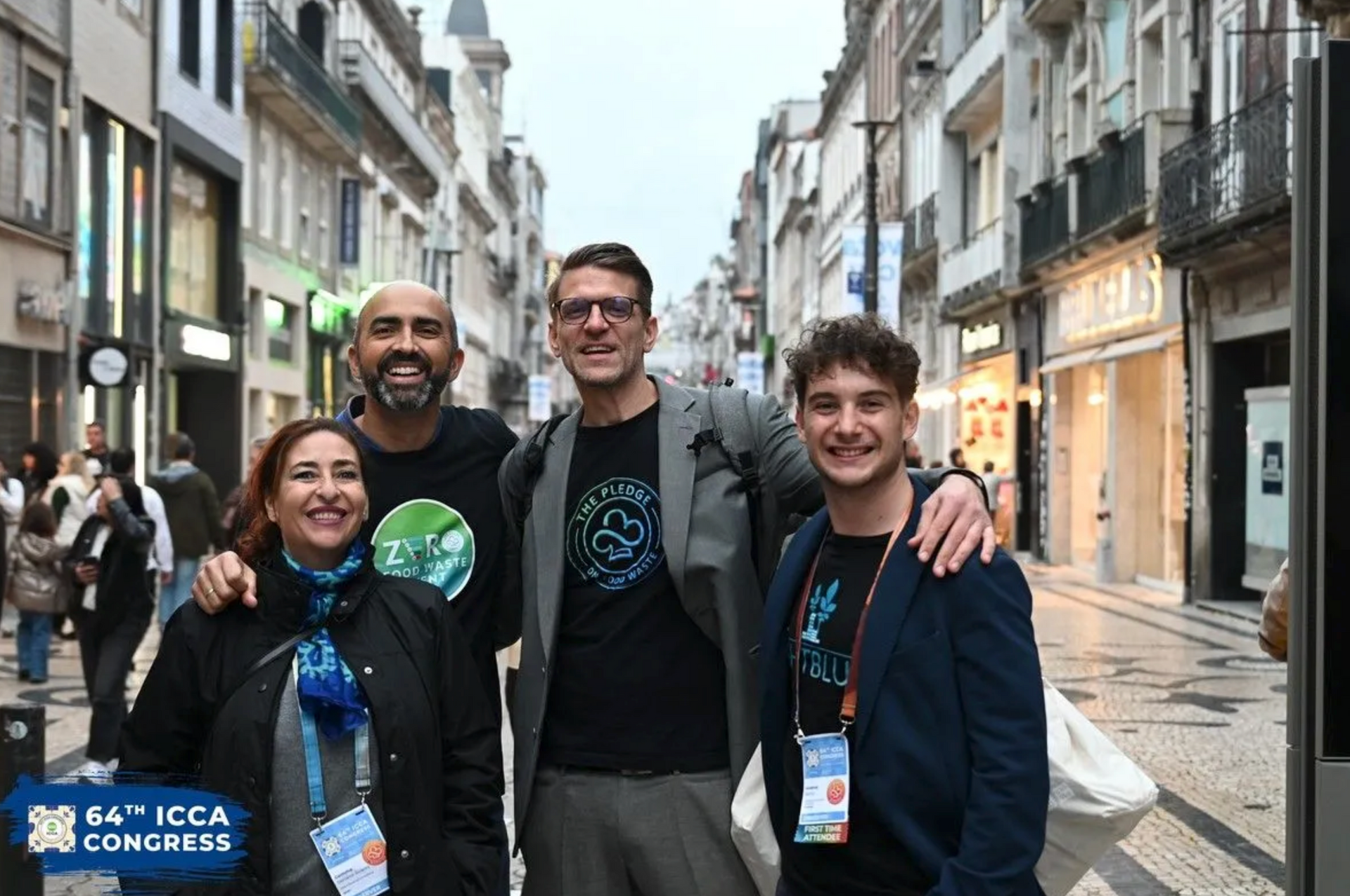
64th ICCA Congress (Porto, 2025): from milestone to standard
Following the milestone achieved in Abu Dhabi, the 64th ICCA Congress in Porto (2025) reinforced a key idea: “zero waste” is not a one-off action, but a standard that can be repeated and scaled. At Open Revenue Consulting, we see this as a strong step forward in consolidating zero waste events, with an increasingly replicable approach for the industry.
ICCA’s official closing statement described the event as a “groundbreaking” global congress, bringing together 1,514 delegates from 81 countries. It was the largest congress ever held in continental Europe and featured a multi-venue format across the city (9 venues) under the theme “Charting the Course”, including a dedicated track on Impact and Sustainability.
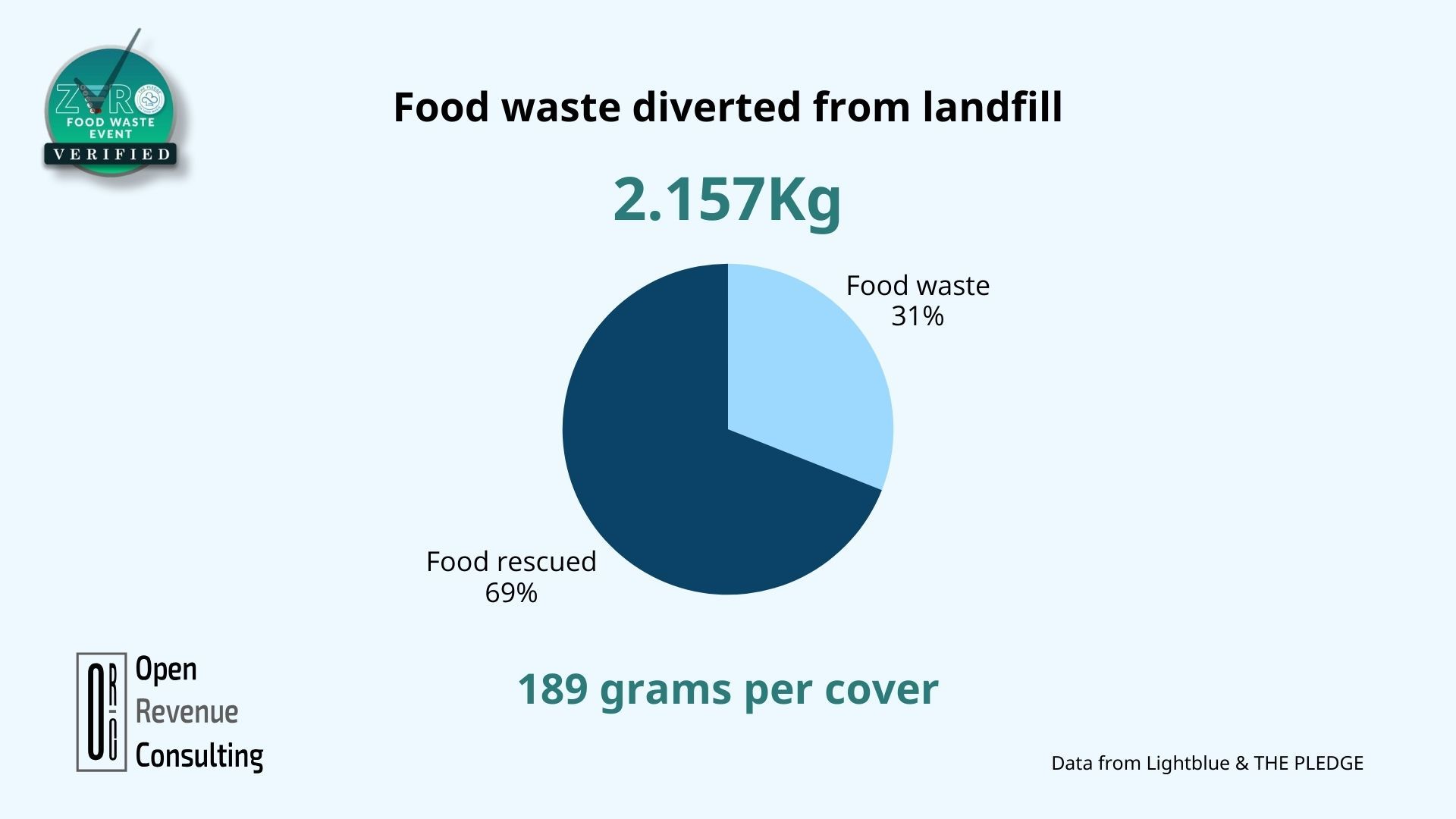
Reducing food waste
At the 64th edition in Porto, the impact once again translated into measurable results: 2,157 kg of food waste were prevented, equivalent to 189 g saved per cover. In addition, 2,990 meals were rescued and 5,392 kg of CO₂ equivalent were reduced.
What ICCA makes clear: food waste-free events are possible.
The real value of this standard lies in the process: training, measurement, segregation, rescue and redistribution, and auditing. In other words, sustainability brought into real operations.
For hotels, catering operations and groups with high F&B output, this approach is especially relevant because it connects directly with the factors that have the greatest impact on the business: cost, efficiency, control and reputation.
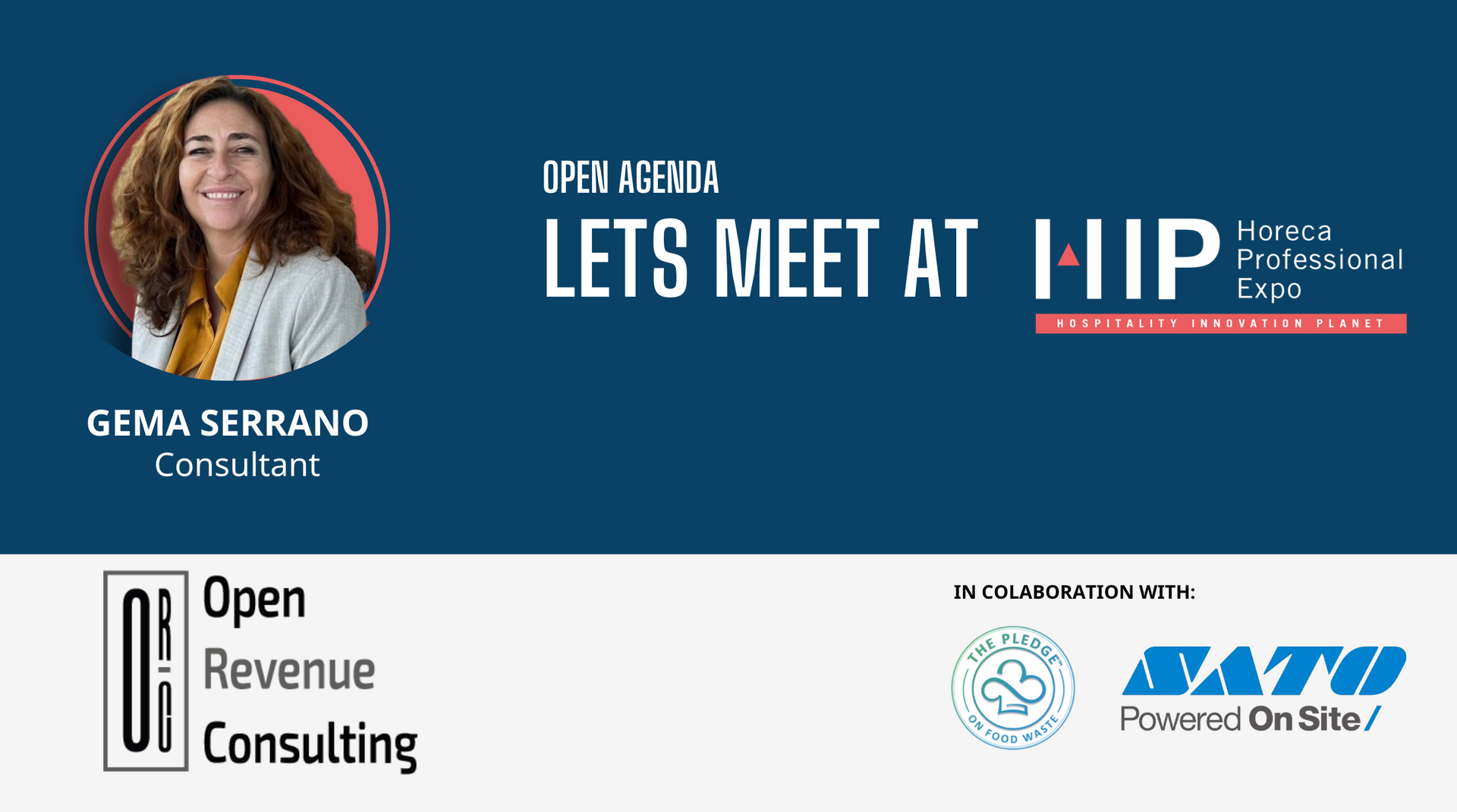
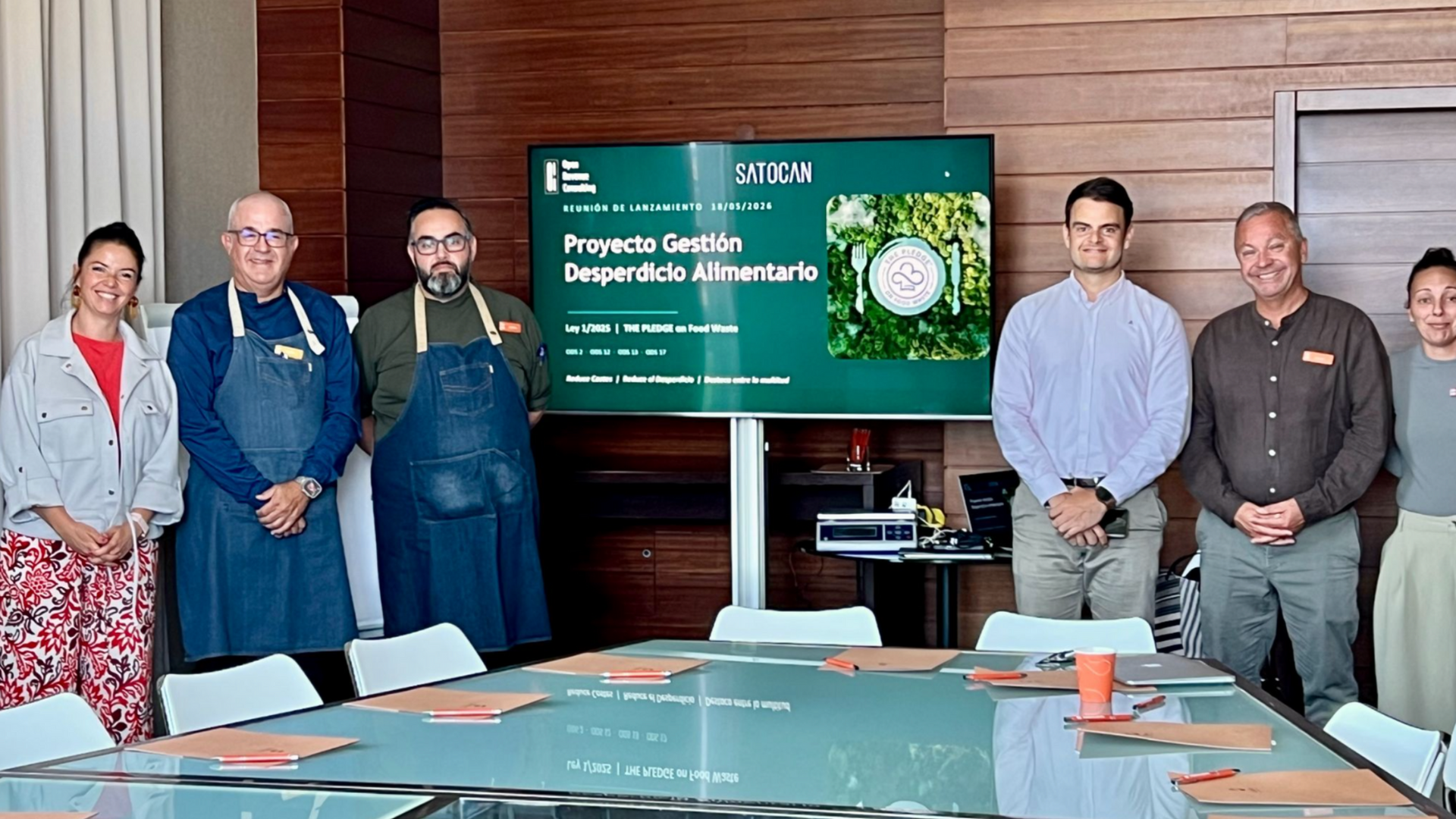
The conversation continues at HIP 2026 with Open Revenue Consulting, official consultants for THE PLEDGE on Food Waste, together with SATO technology.
This learning, from a global congress to day-to-day operations, is exactly the conversation we want to accelerate at HIP 2026 (Horeca Professional Expo).
📍 See you at HIP 2026 (IFEMA Madrid)
👉 If you would like to arrange a meeting during HIP, click here.
DESCUBRE COMO OPTIMIZAR Y AUMENTAR TU REVENUE
Mejora la rentabilidad de tu hotel
Con unos pocos datos sobre tu hotel, podemos ayudarte a estimar el impacto económico cómo empezar a mejorar tus beneficios desde el primer día.
Diagnóstico gratuito
Conecta con nosotros
Open Revenue Consulting Blog